Lighting Cabinet, Multi-channel LED, Daylight & Blackbody Simulator, Image Evaluation, Camera Calibration, Visual Assessment


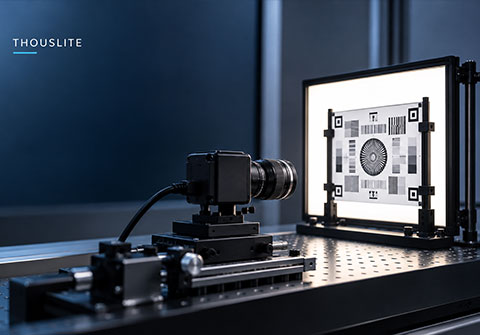 From Spectral Design to Imaging Validation——Building Reliable Lighting Conditions for Camera TestingOverview As spectral power distribution becomes a design variable, how can engineers ensure that lighting conditions are suitable for camera testing? THOUSLITE examines short-exposure imaging, HDR evaluation and color testing through three essential dimensions—spectral, spatial and temporal performance—and explains how measurement and documentation can make imaging results more comparable and reproducible. In our previous article, we explored how AI is opening new possibilities for spectral design. Here, we turn to the next challenge: once a spectrum can be designed, how do we verify that the resulting lighting conditions are fit for camera testing—and that the results can be reproduced and compared? Why might the same camera and test chart produce different color, noise or brightness results in two separate tests? Exposure, gain and image-processing settings are natural places to start troubleshooting. Yet another variable deserves equal attention: did the camera receive the same light in both tests? The spectrum, spatial distribution and temporal behavior of a light source all influence image formation. Measuring and documenting these conditions helps engineering teams isolate the causes of discrepancies and avoid repeated troubleshooting. 1 Standardized Testing Begins with Defined Lighting Conditions IEEE Std 2020-2024, the standard for automotive system image quality, was approved in…2026-10-15